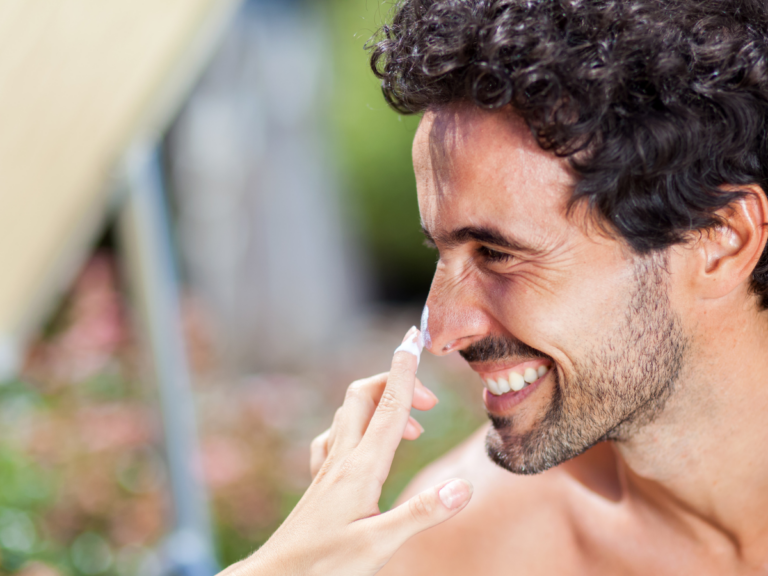
Skin Cancer Facts
The Guide for Patients & Caregivers
Over 5 million non-melanoma skin cancers are treated in the United States every year.
In fact, more people are diagnosed with skin cancer each year in the U.S. than all other cancers combined. But there is a silver lining: when caught early, the cure rate for the most common types of skin cancer is over 95%.
If you or a loved one has just been diagnosed with skin cancer, or if you’ve noticed a suspicious spot, the first thing you need to know is this: You are not alone, and this is highly treatable.
What is Non-Melanoma Skin Cancer?
The vast majority of skin cancer diagnoses fall into two categories, collectively known as non-melanoma skin cancer (NMSC). To understand them, you have to understand the layers of your skin. Your skin has an outer layer (the epidermis) and an inner layer (the dermis). The epidermis is made of three types of cells: squamous cells, basal cells, and melanocytes. NMSCs begin in the first two.
Basal Cell Carcinoma (BCC)
This is the most common form of skin cancer in the world.
Squamous Cell Carcinoma (SCC)
The second most common type, SCC begins in the squamous cells—the flat cells that form the very surface of the skin.
What are the Signs & Symptoms of Non-Melanoma Skin Cancer?
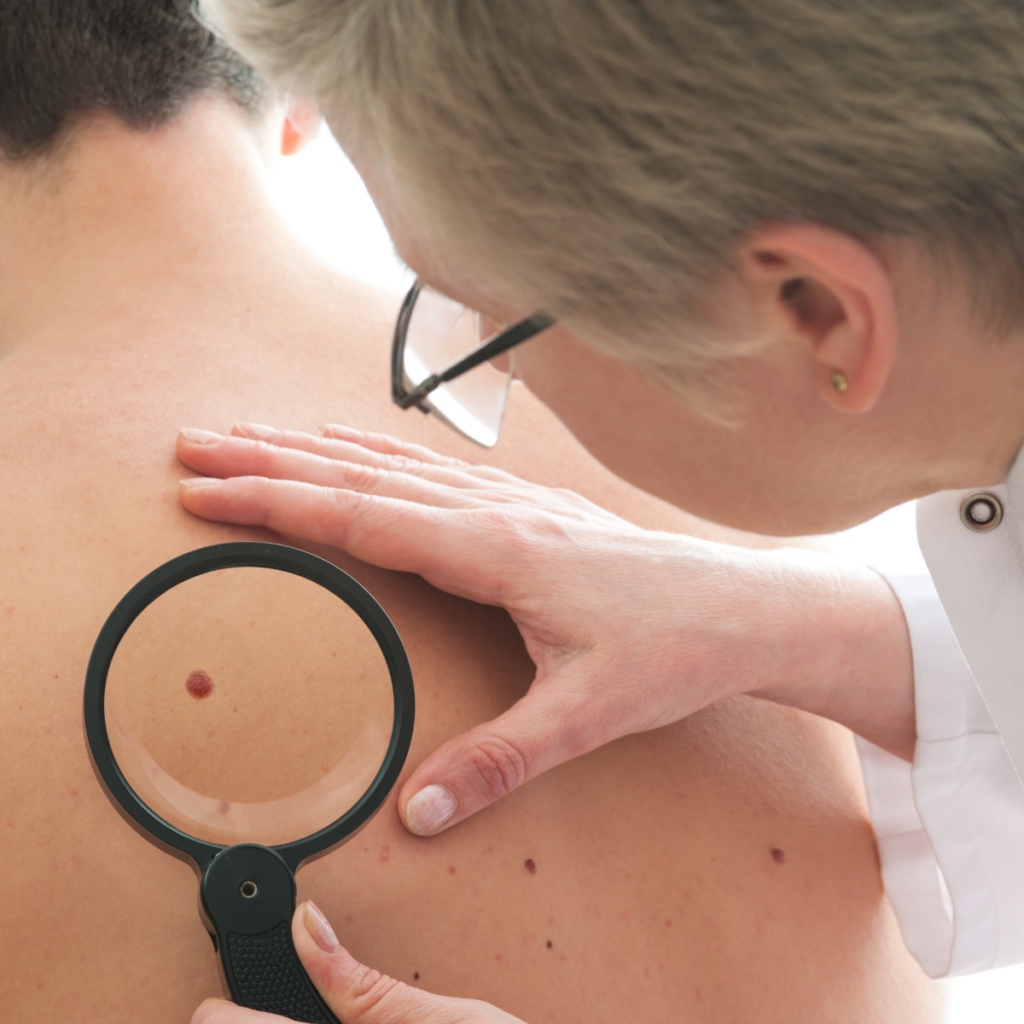
Non-melanoma skin cancers have their own unique warning signals compared to melanoma skin cancers. You are your own best advocate; monthly self-exams are the gold standard for early detection. The following are critical red flags of non-melanoma skin cancer, with some being more specific to either basal cell carcinoma or squamous cell carcinoma.
The Non-Healing Sore: A spot that bleeds, scabs over, appears to heal, and then bleeds again two weeks later needs a biopsy.
The Changing Patch: A rough, scaly red patch that might feel itchy or tender. It may crust or bleed but never fully disappears.
The New Growth: Any new pearly, waxy, or scaly growth. It may look like a harmless age spot at first, but if it has a pearl-like sheen, it’s a red flag.
The “Ugly Duckling”: Dermatologists use this term for a spot that looks, feels, or behaves differently than all the other spots on your body.
The Sensory Signal: Most skin cancers are painless, but some SCCs can feel tender, painful, or cause a pins and needles feeling.
What is the cause of non-melanoma skin cancer?
Skin cancer is primarily a disease of unprotected exposure to ultraviolet (UV) radiation from the sun or tanning beds.
UV rays are high-energy light that can penetrate skin cells and physically break the strands of your DNA. Your body has enzymes that repair these breaks.
However, when the exposure is too intense, from a blistering sunburn, or too frequent, your built-in repair crew gets overwhelmed. This causes errors in the DNA code, which tell the cell to stop dying and start multiplying. That uncontrolled growth becomes a tumor or lesion.

Who is at risk for non-melanoma skin cancer?
While anyone – regardless of skin tone – can get skin cancer, you are at higher risk if you:
Fair Skin/Eyes: Have fair skin, freckles, or hair that is naturally blond or red.
Childhood History: A history of even one blistering sunburn in childhood increases your lifetime BCC risk significantly.
The “Cumulative” Life: If you worked outdoors, lived in high-altitude or sunny climates, or used tanning beds in your 20s.
The Immune System: Patients who are immunocompromised or on certain medications have a much higher risk of aggressive SCC.
The Path to Diagnosis: Biopsy and Risk-Leveling
If a dermatologist sees a suspicious spot, they will perform a skin biopsy. This is usually a quick office procedure.
The biopsy types:
Unlike breast or lung cancer, non-melanoma cancers (BCC/SCC) are rarely “staged” (Stage 1, 2, 3, 4) unless they are very large or there is evidence they have spread. Instead, your doctor will look at the risk level, which determines how aggressive the treatment needs to be.
- Low-Risk Lesions: Typically small (under 2cm), located on the trunk or limbs, and show “non-aggressive” cell patterns under the microscope.
- High-Risk Lesions: Lesions larger than 2cm, those located on “mask areas” of the face (nose, eyes, lips, ears), or those with “aggressive” cell patterns (like “infiltrative” or “micronodular” BCC). High-risk lesions require more specialized treatment to ensure the cancer doesn’t return.
Modern Treatment Options: Navigating Your Choices
For decades, surgery was the only path. Today, medical technology has evolved. The “best” treatment depends on your health, your lifestyle, your age, and where the cancer is located.
Key Resources
-
Skin Cancer Screening: When to See Your Doctor
Wondering when to do a skin cancer screening? What to expect during a skin check, how to spot warning signs, and modern non-surgical options.
-
What to Know About Skin Cancer, Starting With the Tip of Your Nose
How common is skin cancer on the tip of your nose? Learn about this, and more, in this blog post from Treat Skin Cancer.
-
Signs and Symptoms of Skin Cancer on Legs
Legs are the third most common place on the body for squamous cell carcinoma. Here are the signs and symptoms of skin cancer to look out for on your legs.