The average person waits months between first noticing a suspicious spot and actually booking an appointment. In fact, recent data shows that patients are often waiting four to six months before they see a dermatologist to examine a suspicious spot on their skin.
These delays can happen because of long wait times to see a dermatologist. However, it also happens because people don’t know when to be concerned with a mole or spot on their skin. Between appointment waitlists, appointment costs, and busy schedules, taking action often gets pushed to the back burner.
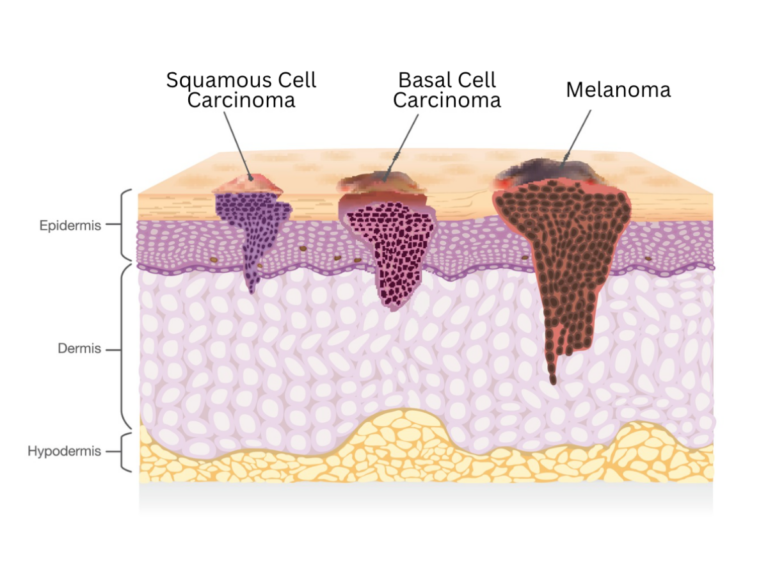
Most non-melanoma skin cancers like basal and squamous cell carcinomas are curable when they are caught early. Sometimes they aren’t caught early because the skin cancer screening appointment never made it on the calendar. Delays in identifying cancerous lesions or suspicious spots turn simple, minimally invasive treatments into larger, more complex procedures.
It’s also important to note that you do not have to have any concerns to schedule an annual skin check. In fact, most experts recommend that everyone schedule a screening with their primary care doctor or dermatologist.
What can I expect during a skin cancer screening?
The entire visual exam is quick and non invasive.
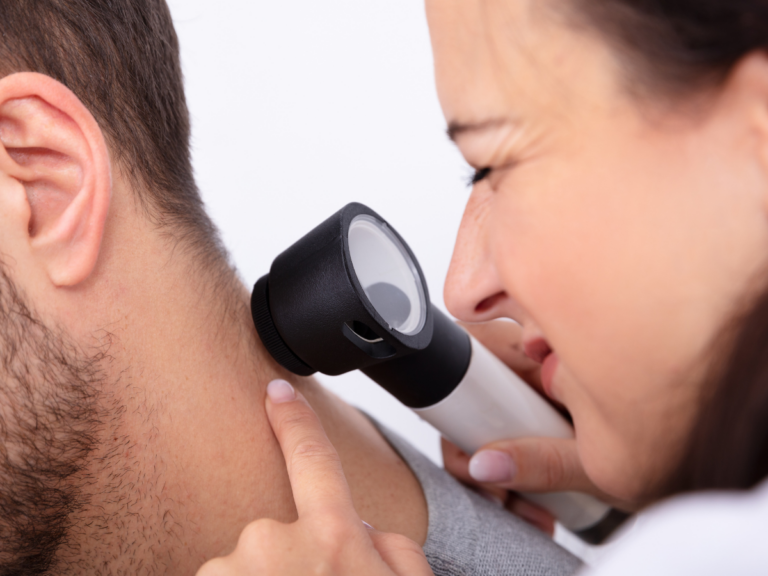
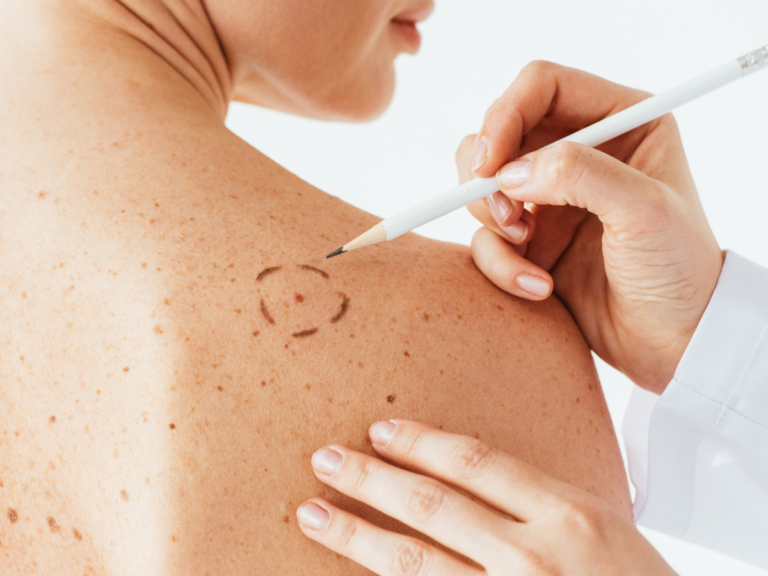
During the appointment, the practitioner will discuss your medical history and note any current concerns that you may have. From there, the dermatologist will conduct a head-to-toe check, focusing on areas that are hard to see yourself – like your scalp, behind your ears, your back, between your toes, and the soles of your feet. They may use a dermatoscope (magnifier with a light) on anything that may look unusual.
If there is something that looks unusual, your dermatologist will discuss it with you and walk through steps on what happens next. This may include continuing to monitor the spot to see if it changes in size or appearance, or taking a biopsy of the mole or spot for further testing.
How often should I have a skin cancer screening?
The frequency at which you should get a skin check depends on your family history of skin cancer, as well as your own history with spots and moles. In most cases, it’s recommended that a skin check be conducted every year with your dermatologist.
In some cases, more regular skin checks (such as every 3 to 6 months) are recommended, particularly if you have:
- A personal history with skin cancer
- A strong family history of skin cancer
- Many moles or spots on your skin
- A lot of cumulative sun exposure, or tanning bed use
- Immunosuppression or conditions that elevate skin cancer risk
- Fair skin that burns easily
If you’ve noticed that something on your skin has changed, or a new mole has appeared or changed significantly, it’s important to schedule a skin cancer screening. Your primary care doctor can be the first point of contact for a skin check as well, especially if your insurance requires a referral or if you need an immediate look.
In addition, between skin check sessions with your dermatologist, it’s important to conduct self checks at home. This can be done each month. Take photos of anything that looks unusual or continues to evolve. Using the ABCDEs can help identify what may be worth monitoring or sharing with your medical team:
- Asymmetry (one half doesn’t match the other)
- Border (irregular, jagged, or blurred edges)
- Color (uneven shades or multiple colors)
- Diameter (larger than a pencil eraser)
- Evolving (changing in size, shape, color, or bleeding)
It’s important to note that you know your skin best, so if there are any changing spots or moles that look unusual to you, make note.
What happens after my appointment?
Most skin checks end with no action on your end, other than to continue to take care of your skin and protect it from the sun. For most patients, a skin check provides immediate peace of mind with a clean bill of health. It results in simple instructions to continue daily sun protection, perform monthly self-checks, and return in 12 months for your next routine exam.
If a lesion appears suspicious, your provider will perform a quick, in-office biopsy and send the tissue to a dermatopathology lab for analysis. Results typically return within 7 to 10 business days, but may vary based on your provider and location.
The biopsy may come back normal, and that mole or spot will become something you continue to monitor with your dermatologist. However, if the biopsy comes back with skin cancer, know that most non-melanoma skin cancers are highly treatable.
Today, there are multiple treatment paths including non-invasive treatment options that do not mean you have to have surgery in order to remove the lesion or cancerous growth.
What can I do to prevent skin cancer?
Most skin cancer occurs because of exposure to ultraviolet (UV) rays from the sun, which damages the skin cells. About 90% of non-melanoma skin cancers are attributed to exposure to UV rays from the sun.
To prevent this from occurring, there are a few key things that you can do all year round to protect your skin:
- Wear a broad spectrum sunscreen. A broad spectrum sunscreen will protect against all the sun’s rays, whether it is UVA or UVB. Choose a sunscreen with an SPF of 30 or higher and make sure to reapply frequently, especially if you are exercising or sweating outside.
- Opt for sun hats and sun-protective clothing. Shielding your skin is your first line of defense. Wear wide-brimmed hats, UV-blocking sunglasses, and Ultraviolet Protection Factor (UPF) clothing to cover high-exposure areas like your shoulders, chest, and neck.
- Seek shade and stay hydrated. The sun’s rays are strongest between 10 a.m. and 4 p.m. Plan outdoor activities for early morning or late afternoon, seek shade, and wear UV-blocking sunglasses.
If you notice a spot that is new, changing, or refusing to heal, take a photo and contact your dermatologist for an evaluation right away.
Need to find a dermatologist near you? Whether you need a baseline screening or a second opinion on a recent biopsy, you have choices in your care. Check out the Sensus Healthcare Location Finder for our directory of dermatologists and clinicians that offer non-invasive treatment options.