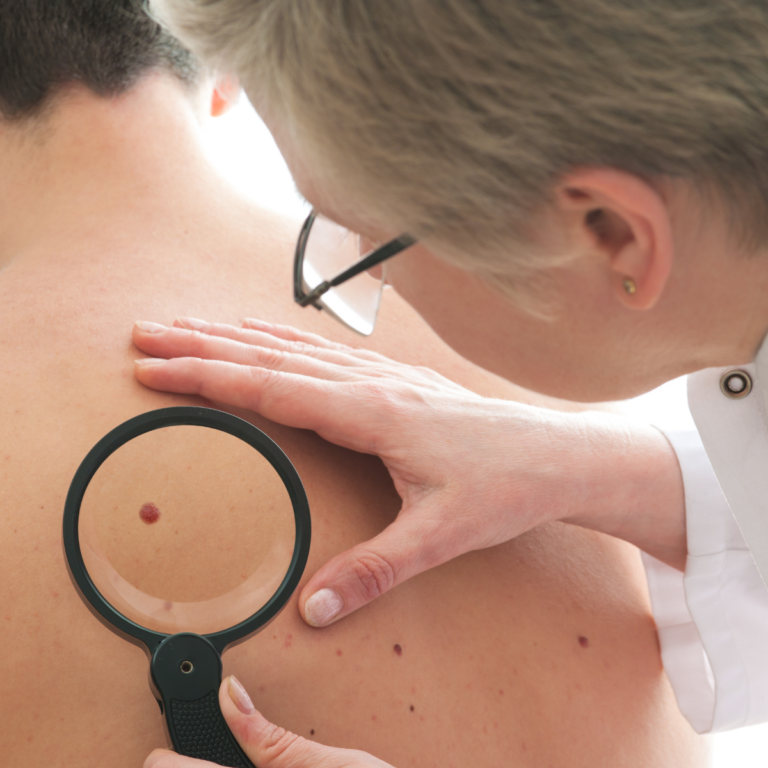
Hearing you have skin cancer can feel stressful and cause anxiety, especially when you start to wonder what happens next. There are several questions that come to mind. “Can you cure it?” often becomes the first question for those diagnosed with skin cancer.If you have been diagnosed with squamous cell carcinoma (SCC), a type of non-melanoma skin cancer, the good news is that squamous cell carcinoma is highly treatable and curable when caught early.While the survival and cure rates are over 99% overall for patients with SCC, traditional standard treatments can make patients feel like the cure is as daunting as the diagnosis. However, modern technology has evolved. Patients today now have access to advanced, non-invasive treatment options that allow them to cure SCC without ever undergoing traditional surgery.
What is Squamous Cell Carcinoma?
Squamous cell carcinoma is a type of non-melanoma skin cancer. It is the second most common form of skin cancer.Squamous cell carcinoma – which is often referred to as SCC – develops in the squamous cells, which are located in the outer layers of the skin. Most often, SCC is caused by cumulative exposure to the sun’s ultraviolet (UV) rays.Squamous cell carcinoma may appear anywhere on the body. It typically appears on areas that are frequently exposed to the sun, like your scalp, the backs of your hands, ears, or lips.How do you know if it’s squamous cell carcinoma? SCC typically appears as:
When caught in its early stages, localized SCC has a five-year survival rate of 99%. Early detection is important. If the lesion is left untreated, it can eventually grow deeper into the dermal layers of the skin, potentially invading and spreading to surrounding structure or lymph nodes.
What is the Treatment for Squamous Cell Carcinoma?
The standard treatment method for squamous cell carcinoma has involved traditional surgery. Standard surgical excision and Mohs micrographic surgery are the typical approaches. Standard surgical excision cuts the tumor out along with a margin of healthy tissue. Mohs surgery removes cancer layer by layer – examining each layer under a microscope in real time until the examined layer has no evidence of malignant cells.While Mohs surgery is highly effectively and boasts a cure rate of up to 99% for primary localized lesions, it is still a surgical procedure that can carry drawbacks for certain patient populations.The challenges of invasive surgery for those with SCC:
The Modern Solution: How to Cure Squamous Cell Carcinoma without the Scalpel
For patients who may not be a candidate for surgical removal of their SCC, Superficial Radiotherapy (SRT) may be a treatment option. SRT offers a non-invasive treatment option by delivering a precise-low energy dose of superficial X-ray energy.The X-ray energy targets the rapidly dividing cancerous cells, disrupting their DNA so they cannot continue to grow. The healthy tissues surrounding the area naturally repairs.Most importantly, opting for a non-surgical path can offer similar cure rates to surgical options. For instance, SRT from Sensus Healthcare has a cure rate of 98.9%, similar to surgical options like Mohs.Because there is no cutting, there are no painful needles, no stitches, no permanent surgical scars, and no need for reconstructive plastic surgery. All of this means there’s no required downtime for recovery.
What Does a Non-Surgical Treatment Look Like?
The entire treatment for SCC with SRT from Sensus Healthcare occurs right in your dermatologist’s office. There is no preparation for surgery and no visit to the hospital.Here’s what can be expected during a typical session:
Choosing Your Path to Curing Squamous Cell Carcinoma
When managing a skin cancer diagnosis, you are in control of your healthcare journey.There are multiple treatment options that result in a cure for squamous cell carcinoma. Speaking with your dermatologist to understand what may be available, given your unique case, allows you to choose what works best for your health, your lifestyle, and your peace of mind.If you or a loved one has recently been diagnosed with localized SCC, ask your dermatologist whether a non-surgical approach like SRT from Sensus Healthcare fits your specific clinical profile. You deserve a treatment plan that eliminates the disease effectively without compromising your comfort or your appearance.
Check out the Sensus Healthcare Location Finder to find a certified dermatologist or skin cancer specialist offering advanced SRT options near you today.