Skin Cancer Treatment Options
The Ultimate Guide for Patients & Caregivers
You have treatment options.
When you’ve just received a diagnosis of non-melanoma skin cancer, your next conversation likely focuses on how to treat it. It may be jarring, as it’s a choice you didn’t know you had to make.
The best treatment isn’t a universal truth. It is a personalized choice based on the type of cancer, its location, your overall health, and your personal priorities regarding scarring and recovery.
This guide breaks down the five primary treatment paths to help you lead an informed conversation with your dermatologist or oncologist.
Mohs Micrographic Surgery
The Gold Standard for Precision
Mohs surgery is widely considered the most effective technique for removing the two most common forms of skin cancer. It was developed by Dr. Frederic Mohs in the 1930s and has been refined into the precise micrographic process used today.
Unlike standard surgery, Mohs is performed in stages while you wait.
- The surgeon numbs the area and removes the visible tumor along with a very thin layer of surrounding tissue.
- While the patient waits with a temporary bandage, the surgeon color-codes the tissue and examines it under a microscope in an on-site lab.
- If cancer cells are seen at the edges, the surgeon knows exactly where they are and removes another thin layer of tissue only from that specific spot.
- This process repeats until the microscope shows no remaining cancer.

Superficial Radiotherapy (SRT)
The Modern Non-Invasive Alternative
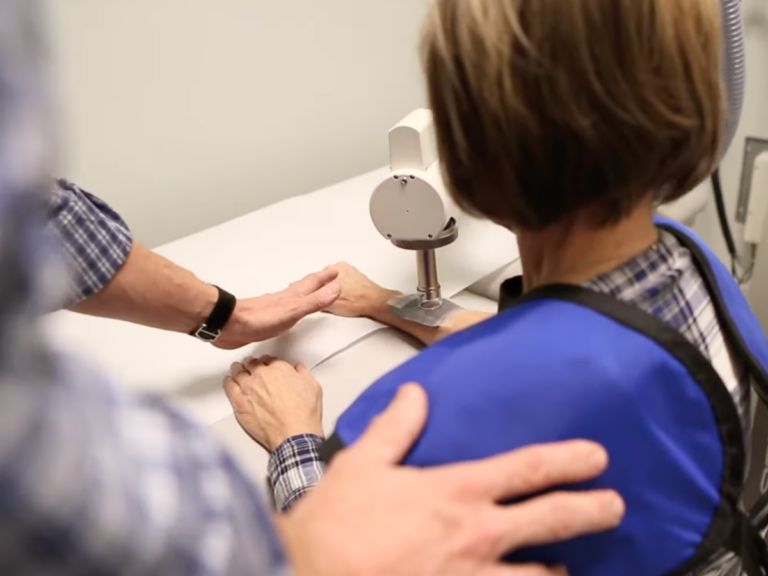
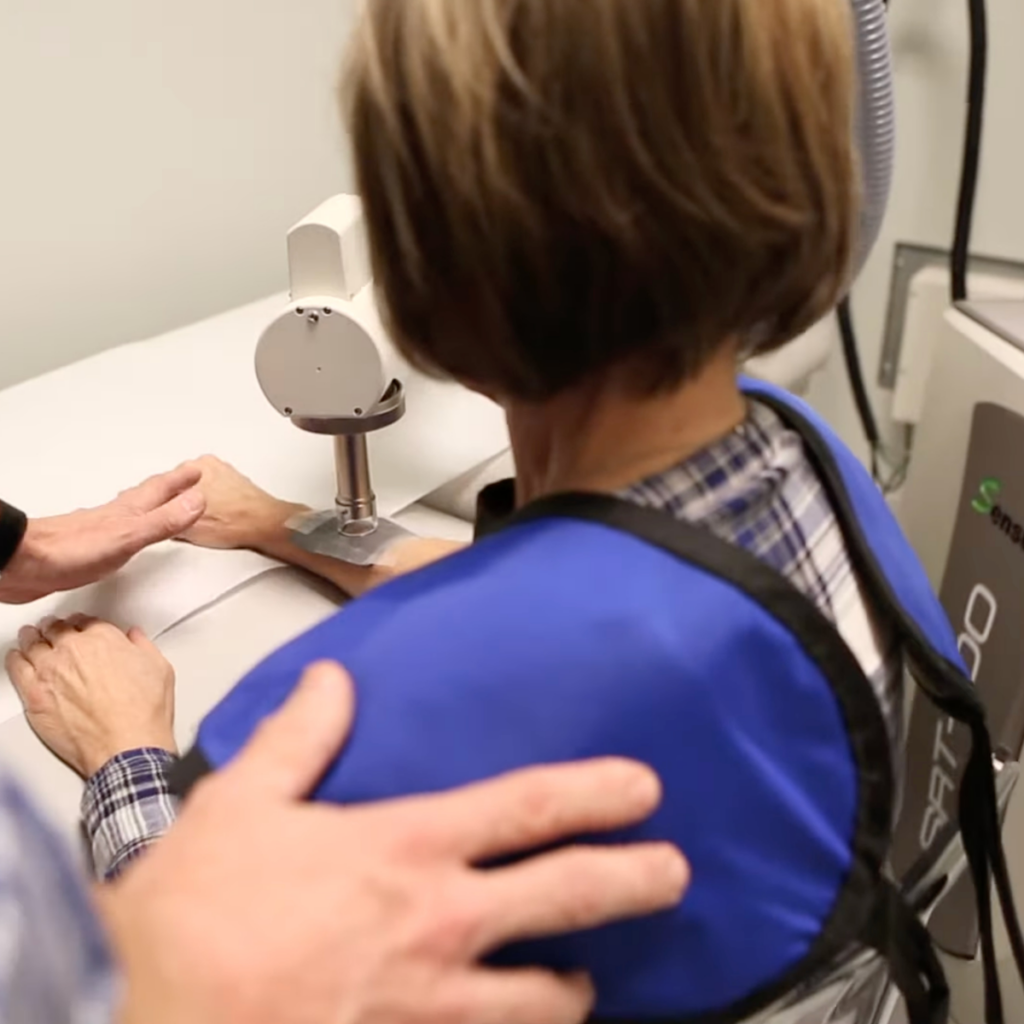
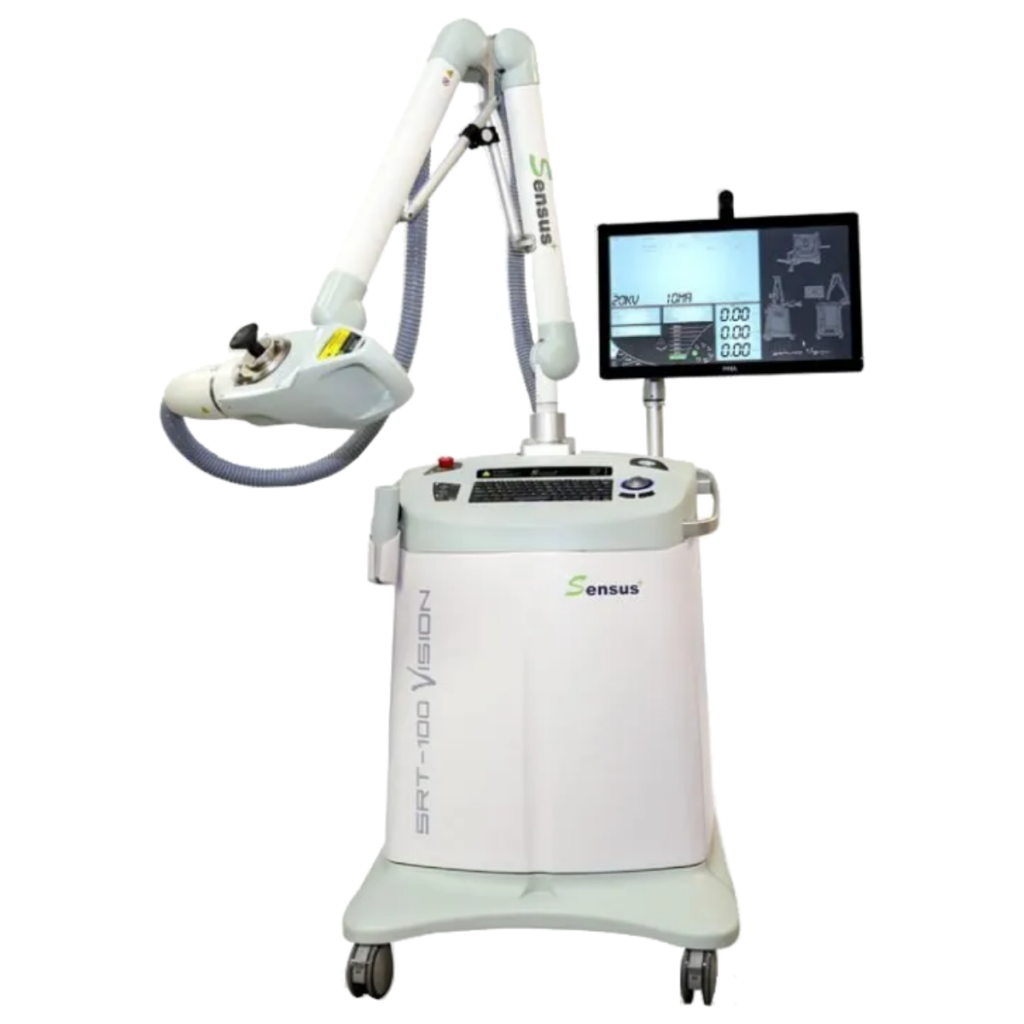
For patients who want to avoid surgery or for whom surgery is medically risky, Superficial Radiotherapy (SRT) has emerged as a high-efficacy, non-surgical alternative. Unlike the high-energy radiation used for internal organs, SRT uses low-energy X-rays that only penetrate the surface of the skin.
SRT delivers a precise dose of radiation to the site of the cancer. This energy disrupts the DNA of the cancer cells, preventing them from dividing and eventually causing them to die off, while the surrounding healthy skin cells are able to repair themselves.
- No cutting or numbing is required.
- The treatment is delivered in short sessions (usually under 5 minutes) over several weeks.
- Over the course of the treatment, the cancer spot slowly disappears as healthy tissue takes its place.
Standard Surgical Excision
The Traditional Approach
Standard excision is the most common surgical method for treating all types of skin cancer. It is simpler and faster than Mohs surgery, but less precise in its preservation of healthy tissue.
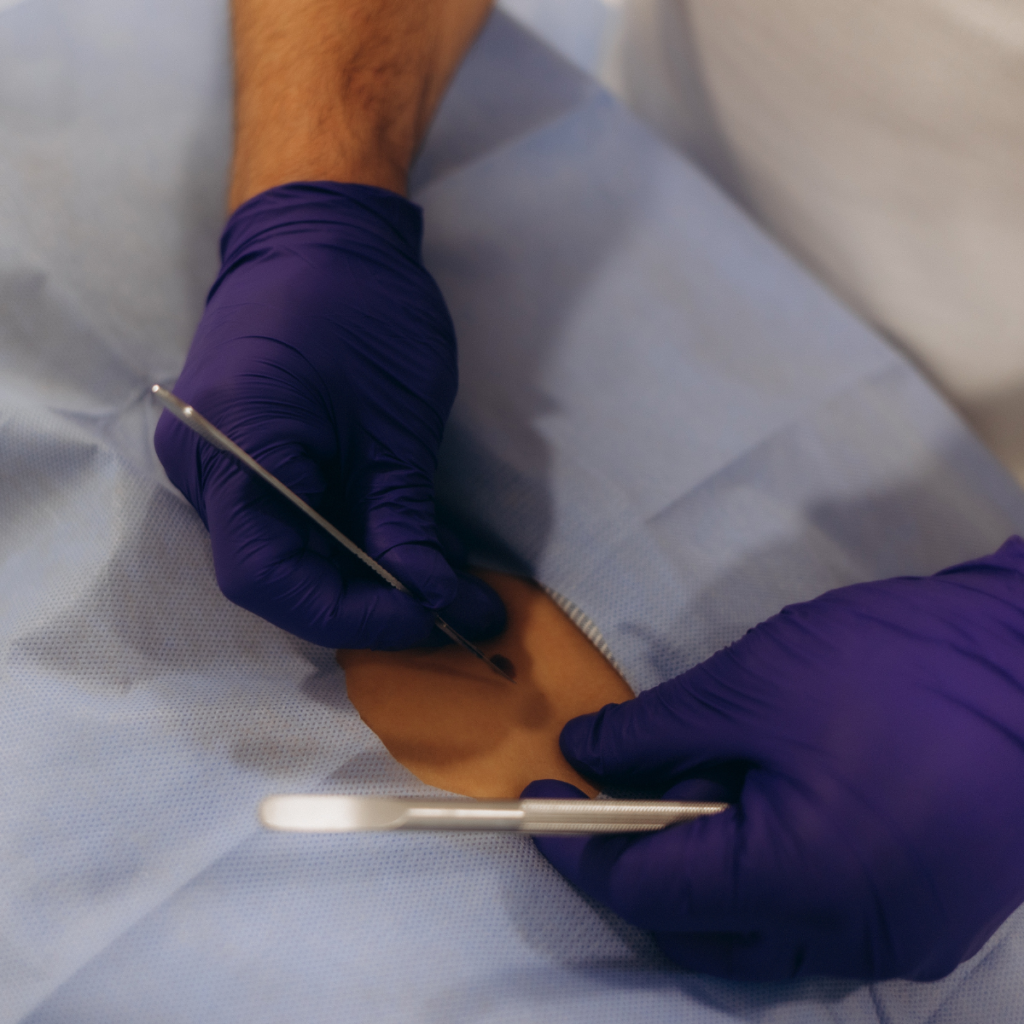
The doctor numbs the area and uses a scalpel to remove the entire growth plus a “safety margin” of healthy-looking skin around it. The wound is closed with stitches, and the removed tissue is sent to an off-site pathology lab. You usually receive your “clear margins” results several days later.
Key considerations:
- Efficiency: The procedure itself is relatively quick (usually under 30 minutes).
- Margins: Because the tissue isn’t checked in real-time, the surgeon must take a wider margin of healthy skin to ensure the cancer is gone. If the lab report comes back showing cancer at the edges, a second surgery is required.
- Best For: Cancers on the trunk (chest, back) or limbs where a slightly larger scar is less of a cosmetic concern.
Curettage and Electrodesiccation (C&E)
The “Scrape and Burn” Method
This is an effective, fast treatment for very early-stage or superficial basal cell and squamous cell carcinomas.
As a non-invasive method, C&E includes several steps.
- After numbing the site, the doctor uses a “curette” (a sharp, spoon-shaped tool) to scrape away the soft, cancerous tissue.
- An electric needle is then used to apply heat (electrodesiccation) to the area to kill any remaining cancer cells and stop the bleeding.
- This cycle is typically repeated two or three times in one visit.

Topical Therapies and Photodynamic Therapy
For very thin, superficial skin cancers that have not yet grown deep into the dermis, non-invasive creams or light treatments may be an option.
Topical Creams:
These are prescription creams applied at home over several weeks. They work by stimulating your immune system to attack the cancer cells or by interfering with the cells’ ability to grow.
- Pros: Non-invasive and done at home.
- Cons: They can cause severe redness, crusting, and discomfort at the site for the duration of the treatment.
Photodynamic Therapy (PDT):
A light-sensitizing liquid is applied to the skin and allowed to “soak in” to the cancer cells. The doctor then shines a specific wavelength of blue or red light on the area, which activates the liquid and destroys the cancer.
- Pros: Good for treating large areas with “pre-cancerous” spots (actinic keratoses).
- Cons: Requires strict avoidance of sunlight for 48 hours after treatment; less effective for deep-rooted tumors.
The Critical Comparison: Surgery vs. Non-Invasive (SRT)
The highest cure paths are Mohs Surgery and SRT. Mohs Surgery has a cure rate of 99%, while SRT has been proven to have a cure rate of 98.9% in clinical studies. When comparing between the two, patients should take into consideration critical factors about their diagnosis, lifestyle, and treatment goals.
|
Mohs Surgery |
Superficial Radiotherapy (SRT) |
|
|---|---|---|
|
Invasiveness |
Surgical (cutting, numbing) |
Non-invasive (low-energy radiation) |
|
Pain |
Numbing shots required, post-op soreness |
Painless during and after |
|
Time Commitment |
One long day (3-8 hours) |
Up to 12 short visits (5 minutes each) |
|
Wound Care |
Stitches, bandages, potential grafts |
No wound; daily moisturizing only |
|
Scarring |
Linear or flap scar |
Minimal to no visible scarring |
|
Downtime |
Restrict activity for 1-2 weeks |
No restrictions on activity |
Key Resources
-
Can You Cure Squamous Cell Carcinoma?
Hearing you have skin cancer can feel stressful and cause anxiety, especially when you start to wonder what happens next. There…
-
Treatment for Uncommon Skin Cancer Locations
When most people think of skin cancer, they imagine sun-damaged areas like the face, shoulders, or arms, but there are uncommon…
-
Skin Care Awareness Month: Why Early Detection and Non-Invasive Treatments Matter
September is Skin Care Awareness Month, which is an important time to reflect on the role skin health plays in overall…